
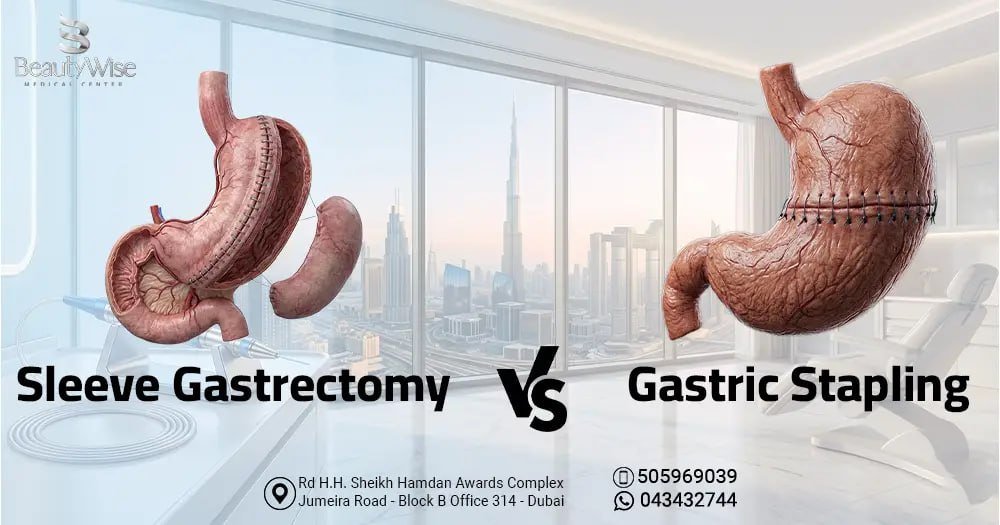
Facing obesity is far more than a struggle with numbers on the scale; it is a daily journey filled with physical and emotional challenges. Choosing between Gastric Stapling vs Sleeve Gastrectomy as a permanent, effective solution is not a sign of failure, but a courageous and wise decision to regain control over your health and your life. At Beauty Wise Medical, this decision is deeply respected, and every person is seen as deserving of an active, confident life.
Table of Contents
Gastric Stapling vs Sleeve Gastrectomy
Modern bariatric surgery offers a powerful, scientifically proven tool for a profound and lasting transformation. It is not only a way to lose excess weight; it is also an opportunity to improve or even resolve obesity‑related diseases such as type 2 diabetes, high blood pressure, and heart disease, opening the door to a longer and healthier life.
Yet with multiple options available, a key question arises: which procedure is truly right for you? You may have heard of gastric stapling as an older solution, and of sleeve gastrectomy (gastric sleeve) as the current gold standard. This guide explains the difference between Gastric Stapling vs Sleeve Gastrectomy in a clear, practical way.
At Beauty Wise Medical, the team considers itself your partner throughout this transformative journey. The mission goes beyond performing surgery with the highest standards of precision and safety, to include educating and empowering you to make an informed decision, and supporting you at every step toward long‑term success.
Gastric stapling as an outdated procedure
To understand how far bariatric surgery has advanced, it is important to revisit its early stages. Gastric stapling in Dubai, medically known as vertical banded gastroplasty, was one of the pioneering attempts that paved the way for today’s better options, yet it also provided key lessons that ultimately led to its abandonment.
In 1982, Dr. Edward Mason introduced this operation as an innovative surgical answer to the rapidly worsening problem of severe obesity worldwide. The procedure became very popular in the 1980s and early 1990s, and it was performed on thousands of patients who were seeking new hope.
Over time, however, its serious limitations became clear, and its popularity declined steadily until it disappeared completely from modern practice by around 2005. This timeline does not simply reflect failure; it illustrates scientific progress and the shift toward safer, more effective solutions.
How gastric stapling worked
The concept behind gastric stapling was simple and purely mechanical. The surgeon used a vertical row of staples to create a very small pouch at the top of the stomach, usually no more than 10 milliliters in volume. Then a band or mesh ring was placed around the outlet of this small pouch to narrow it. The design relied on two main principles:
- Fast feeling of fullness: the tiny pouch filled quickly with a very small amount of food, sending early satiety signals to the brain.
- Slowing food passage: the tight ring made it harder for food to leave the pouch and pass into the rest of the stomach, which prolonged the feeling of fullness.
This procedure relied entirely on restricting how much food the patient could eat, without influencing hormones or the way nutrients are absorbed.
Why gastric stapling faded away?
The end of the gastric stapling era was not sudden; it was the natural result of its many long‑term drawbacks, revealed by years of patient follow‑up.
- Long‑term failure of weight‑loss results: this was the main reason it fell out of favor. Studies showed that more than half of patients regained much of the weight they had lost, often within just two years of surgery. Over time, the tiny pouch tended to stretch, and many patients adapted by consuming high‑calorie liquids, which cancelled out the restrictive effect of the surgery.
- Troublesome complications: a large number of patients experienced chronic issues that greatly affected quality of life, including severe acid reflux, frequent vomiting, and difficulty eating solid foods. The supporting band could also erode into the stomach wall or slip out of place, often requiring complex corrective surgery.
- Limitations of the surgical technique: gastric stapling was usually performed through a large open incision in the abdomen. This approach meant more pain after surgery, a longer recovery period, and higher risks of infection and incisional hernia. Early attempts to adapt the operation to laparoscopy never reached the desired level of safety or success.
- Emergence of superior alternatives: the decisive factor was the development of safer and more effective procedures, especially sleeve gastrectomy. Unlike purely mechanical gastric stapling, sleeve gastrectomy offered a comprehensive solution that addressed both the physical capacity of the stomach and the hormonal drivers of hunger.
Sleeve gastrectomy (gastric sleeve) as the modern standard
Sleeve gastrectomy, also called longitudinal gastric sleeve or gastric sleeve surgery, represents a true shift in bariatric surgery. It is no longer just a way to reduce stomach size; it has become a comprehensive metabolic procedure that addresses both the mechanical and hormonal aspects of obesity. As a result, sleeve gastrectomy is now the most widely performed and most successful weight loss surgery worldwide.
Originally, sleeve gastrectomy was not designed as a stand‑alone operation. It was first used as the initial stage of a more complex two‑step surgery for patients with very high body weight, to reduce risk.
Surgeons, however, observed something remarkable: after the first stage (stomach sleeve resection), patients lost a substantial amount of weight and showed such marked improvements in their health that many no longer needed the second stage.
This discovery led to the adoption of sleeve gastrectomy as an independent, definitive bariatric procedure, and since about 2005 its popularity has grown rapidly until it became the current gold standard.
The dual mechanism of success
The success of sleeve gastrectomy lies in its dual mechanism:
- Mechanical (restrictive) effect: the surgeon permanently removes about 70% to 80% of the stomach. The remaining part is a narrow tube or “sleeve”. This smaller volume limits how much food can be eaten at one time, so the patient feels full much more quickly.
- Hormonal (metabolic) effect: the removed portion of the stomach is the main source of ghrelin, the hormone strongly associated with hunger. When this part is removed, blood levels of ghrelin drop significantly. The result is a noticeable reduction in appetite and better control of cravings, making it much easier for patients to adhere to a healthier lifestyle and balanced diet.
Laparoscopic sleeve gastrectomy step by step
Today, sleeve gastrectomy is performed using advanced laparoscopic (keyhole) techniques, which are minimally invasive and support a safer surgery and faster recovery.
- Pre‑operative preparation: candidates undergo a thorough assessment to ensure they are suitable for the procedure. This includes a physical examination, blood tests, and appropriate imaging studies.
- Surgical procedure: under general anesthesia, the surgeon makes three to five very small incisions in the abdomen. Through these openings, a tiny camera and specialized instruments are introduced. Using modern stapling devices, the surgeon separates and removes the larger portion of the stomach. At the end of the operation, a leak test is performed to ensure the staple line is secure.
- Early recovery: thanks to laparoscopy, hospital stay is short, usually one to three days. Most patients are encouraged to get out of bed and walk within a few hours of surgery, which speeds up recovery and reduces the risk of complications.
Key differences of Gastric Stapling vs Sleeve Gastrectomy
When the two procedures are placed side by side, the Gastric Stapling vs Sleeve Gastrectomy clearly reflects the transition from the past to the present in bariatric surgery. The table below highlights why sleeve gastrectomy is now considered the superior choice for most suitable patients.
| Feature | Gastric stapling (Vertical Banded Gastroplasty) | Sleeve gastrectomy (Gastric Sleeve) |
|---|---|---|
| Procedure | Divides and staples the stomach to create a small pouch without removing any part of the stomach | Permanently removes about 80% of the stomach volume |
| Surgical approach | Most often performed as open surgery through a large abdominal incision | Performed laparoscopically through several small incisions |
| Weight‑loss mechanism | Restrictive only, limiting the volume of food intake | Restrictive plus hormonal, lowering hunger signals and appetite |
| Hormonal impact | No meaningful hormonal effect on appetite or metabolism | Major, direct reduction in ghrelin (the “hunger hormone”) levels |
| Reversibility | Theoretically reversible by removing staples and the band, but revision is difficult and risky | Permanent, not reversible, which supports long‑term commitment and stability |
| Average excess weight loss | Around 50% of excess weight, with a high likelihood of weight regain | About 60% to 80% of excess weight, with more durable and well‑documented results |
| Long‑term success rates | Very low; more than 50% of patients fail to maintain their weight loss | Very high; around 80% to 95% maintain meaningful weight loss when they follow medical guidance |
| Recovery period | Longer and more painful due to open surgery | Much faster recovery, with less pain and shorter hospital stay |
| Common complications | Severe reflux, frequent vomiting, pouch stretching, band slippage, and band erosion | Leak (very rare with experienced surgeons), manageable reflux, and vitamin deficiencies that can be controlled with supplements |
| Current status | An outdated, abandoned procedure that is no longer recommended or performed in reputable centers worldwide | The most common, safest, and most effective bariatric surgery globally, now considered the gold standard |
This comparison between gastric stapling and sleeve gastrectomy does more than list technical data; it tells the story of scientific evolution. Each row illustrates how the medical community learned from the shortcomings and complications of older procedures in order to provide a smarter, more effective, and more sustainable solution today.
Who is a good candidate for sleeve gastrectomy at Beauty Wise Medical?
Choosing sleeve gastrectomy is a life‑changing decision that requires careful and comprehensive evaluation. At Beauty Wise Medical, the ideal candidate is someone who is both physically and psychologically prepared for this journey toward long‑term weight control and health improvement.
Core medical eligibility criteria
Medical suitability is based on internationally accepted standards designed to protect patient safety and optimize outcomes. Typical candidates meet at least one of the following criteria:
- Body mass index (BMI) of 40 or higher.
- Body mass index (BMI) of 35 or higher, combined with at least one obesity‑related condition such as type 2 diabetes, high blood pressure, high cholesterol, obstructive sleep apnea, or fatty liver disease.
- Age generally between 18 and 65 years, with some flexibility depending on individual health status.
Beyond numbers: readiness for change
Real, lasting success depends heavily on the patient’s mindset and commitment. Surgery is a powerful tool, not a magic cure. For that reason, Beauty Wise Medical places great emphasis on psychological readiness, which includes:
- Commitment to lifestyle change: patients must understand that surgery is the beginning of a lifelong journey that requires permanent changes in eating habits and physical activity levels.
- Realistic expectations: weight loss occurs progressively, not overnight. Understanding this helps patients stay motivated and patient with their progress.
- Strong support system: encouragement and practical help from family and friends play a vital role in maintaining new habits and coping with emotional challenges.
- Addressing psychological issues: some conditions may delay surgery until they are better controlled, such as untreated eating disorders or severe depression. In such cases, psychological support is an essential step before proceeding.
A roadmap to lasting success after sleeve gastrectomy
Undergoing sleeve gastrectomy is only the first step in a rewarding journey. Long‑term success depends on embracing a new lifestyle, and Beauty Wise Medical provides a clear roadmap along with ongoing support to guide you through every stage.
Initial recovery phase
The recovery period after sleeve gastrectomy is typically quick and relatively comfortable compared with older open procedures.
- In hospital: most patients stay one to three days. Pain is usually well controlled with medication, and walking is encouraged just a few hours after surgery to enhance circulation and healing.
- First weeks at home: full recovery generally takes four to six weeks. Many people can return to desk‑based or light work within one to two weeks, depending on how they feel and their job demands.
- Wound care: the small incisions usually heal quickly. Patients receive clear instructions on how to care for the wounds, recognize warning signs, and protect the area while resuming daily activities.
Stepwise post‑operative nutrition
After surgery, patients follow a carefully structured diet that progresses through several stages to protect the new stomach and support gradual adaptation.
- Phase 1 (weeks 1–2): clear liquids only, such as water and clear broth.
- Phase 2 (weeks 3–4): smooth, pureed foods, including yogurt and blended creamy soups.
- Phase 3 (weeks 5–8): soft foods such as scrambled eggs and tender fish.
- Phase 4 (after about two months): gradual return to a varied diet with solid foods.
Throughout these stages, patients are advised to eat slowly, chew thoroughly, focus on high‑protein choices, and drink fluids between meals rather than with them. These habits help protect the stomach sleeve, prevent discomfort, and maximize the benefits of the surgery.
Building lifelong healthy habits
Maintaining excellent results requires a genuine commitment to new, healthier routines.
Physical activity
movement becomes a central part of daily life. Most patients start with gentle walking immediately after leaving the hospital, then gradually progress to more structured exercise under medical guidance.
Nutritional supplements
taking vitamin and mineral supplements for life is essential to prevent deficiencies and support overall health. The exact regimen is tailored to each patient’s needs based on follow‑up blood tests.
Regular follow‑up visits
scheduled appointments with the multidisciplinary team at Beauty Wise Medical are critical. They allow for monitoring of weight, nutritional status, mental health, and lifestyle changes, and for early intervention if challenges arise.
Read More: Gastric Sleeve Surgery in the UAE.
Life‑changing outcomes
The impact of sleeve gastrectomy goes far beyond the number shown on the scale; it often reshapes the entire quality of life.
- Major, sustainable weight loss: most patients lose about 60% to 70% of their excess weight within 12 to 18 months.
- Improvement or resolution of chronic diseases: many individuals experience complete remission or major improvement in conditions such as type 2 diabetes, hypertension, and sleep apnea.
- Restored mobility and energy: everyday activities like walking, climbing stairs, or playing with children become significantly easier and more enjoyable.
- Enhanced self‑confidence: regaining control over one’s body and health often translates into greater confidence, social engagement, and emotional well‑being.
Why choose Beauty Wise Medical for sleeve gastrectomy?
At Beauty Wise Medical, patients receive comprehensive, coordinated care that extends far beyond the operating room.
- Expert team at your side: successful bariatric surgery is always a team effort. Beauty Wise Medical brings together leading bariatric surgeons, experienced dietitians, and dedicated psychological support staff. The surgeon’s expertise is especially important in minimizing risks and achieving stable, long‑term results.
- Holistic care and continuous follow‑up: your journey with Beauty Wise Medical does not end when you leave the hospital. A structured follow‑up program extends over years, helping you stay on track, navigate challenges, and celebrate every milestone.
- Proven outcomes and real success stories: the center takes pride in a strong track record of patients who have reclaimed their health, vitality, and happiness. These stories highlight not only dramatic weight loss, but also renewed freedom in daily life and a brighter outlook on the future.
Read More: Gastric Plication Clinic.
Conclusion
In conclusion, this guide has traced the evolution of bariatric surgery from gastric stapling, now a procedure of the past, to the modern gold standard of sleeve gastrectomy. The difference of Gastric Stapling vs Sleeve Gastrectomy shows clearly that sleeve surgery is not just an upgraded version, but a true revolution in obesity treatment, offering a comprehensive solution with effective, safe, and sustainable outcomes when patients follow professional guidance.
Choosing bariatric surgery is a major step, yet it may be one of the most positive investments you ever make in your health, happiness, and future. Your journey toward a new life begins with a single decision, supported by accurate medical advice and genuine care. This content is intended for educational purposes only and does not replace a personal consultation with a qualified healthcare provider.
- Consider whether you meet standard criteria for bariatric surgery and write down your questions.
- Discuss your situation with your primary physician and, if appropriate, a bariatric specialist.
- Contact the dedicated stomach and bariatric clinic at Beauty Wise Medical in the UAE to schedule a thorough, personalized consultation with the expert team, and take the first active step toward your own success story.