
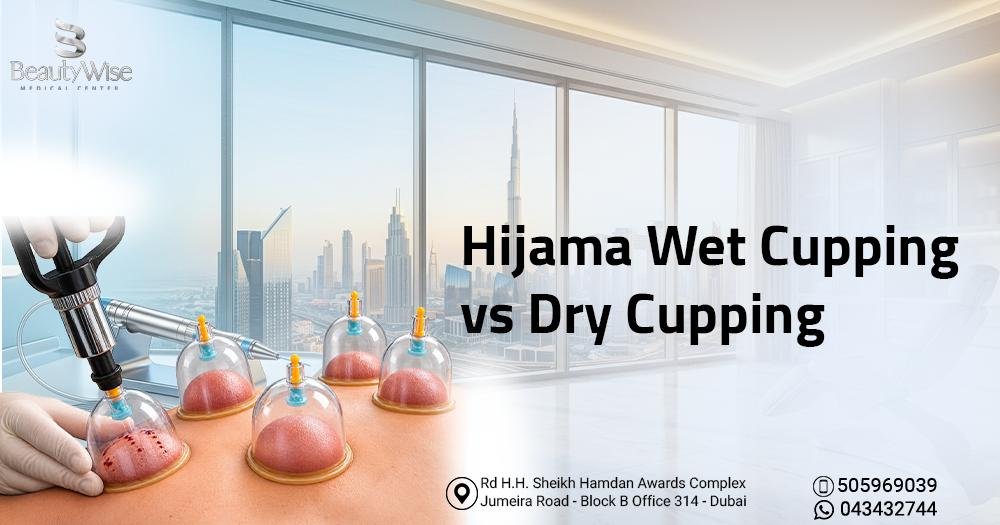
Quick answer: In hijama wet cupping vs dry cupping, the core difference is simple: wet cupping adds small, controlled incisions to draw a small amount of blood, while dry cupping uses suction only with no incisions at all. When comparing hijama wet cupping vs dry cupping, most first-timers start with dry cupping, while patients familiar with traditional hijama usually choose wet cupping. A short consultation is the fastest way to settle the hijama wet cupping and dry cupping question for your own body. People searching hijama wet vs dry cupping are usually trying to decide which session fits their comfort level and goals. Both belong to the same family of cupping therapy, yet they feel different, look different, and suit different patients. This guide breaks down hijama wet cupping and dry cupping so you can walk into your consultation at Beauty Wise Medical Center already informed.
Table of Contents
Hijama Wet Cupping vs Dry Cupping
The starting point in any hijama wet cupping vs dry cupping comparison is the incision step.
- Dry Cupping: Cups create suction on clean, unbroken skin. No blood is drawn. This side of the hijama wet cupping vs dry cupping comparison is considered the gentler introduction.
- Wet Cupping (True Hijama): Cups are applied after small, sterile incisions are made, so a small volume of blood is drawn into the cup. This is the classic, traditional side of the hijama wet cupping vs dry cupping comparison, rooted in Islamic and historical medicine.
Process and Sensation
Dry cupping in the hijama wet cupping vs dry cupping comparison involves cleaning the skin, placing the cups, and holding suction for around 10 to 15 minutes. Most patients describe a pulling sensation, similar to a firm massage, with little to no discomfort.
Wet cupping, the other half of the hijama wet cupping vs dry cupping comparison, adds a short step where the practitioner makes small, sterile incisions after an initial round of suction, then reapplies the cups to draw a small amount of blood. Patients typically describe a brief pinch during the incisions, followed by a light pulling sensation, similar to dry cupping.
Aftercare and Marks
Aftercare is another point where hijama wet cupping vs dry cupping diverge.
With dry cupping, the milder option in the hijama wet cupping vs dry cupping comparison, patients usually see circular marks that fade within a few days. With wet cupping, the marks in the hijama wet cupping vs dry cupping comparison can take a little longer to fade, and the practitioner applies an antiseptic dressing to the small incision points before you leave.
Who Should Choose Which
There is no single right answer in the hijama wet cupping vs dry cupping decision. It depends on your history, goals, and comfort level.
- Choose dry cupping if this is your first time exploring hijama wet cupping vs dry cupping and you want the gentler option.
- Choose wet cupping if you are familiar with traditional hijama and specifically want the incision-based side of the hijama wet cupping vs dry cupping comparison.
- Pregnant patients, people on blood thinners, or those with certain skin conditions should discuss hijama wet cupping vs dry cupping with a doctor before booking either one.
Read more: hijama for head
Side-by-Side Comparison
| Factor | Dry Cupping | Wet Cupping (True Hijama) |
| Incisions | None | Small, sterile incisions |
| Typical duration | 10 – 15 minutes | 15 – 20 minutes |
| Sensation | Pulling, massage-like | Brief pinch, then pulling |
| Mark fade time | A few days | Up to a week or more |
| Best for | First-timers, gentle sessions | Traditional, incision-based sessions |
Pricing in Dubai
| Session Type | Price Range (AED) | Duration |
| Dry cupping | 200 – 300 | 20 – 30 minutes |
| Wet cupping (true hijama) | 250 – 400 | 30 – 45 minutes |
Prices are market estimates based on 2026 data. Confirm exact hijama wet cupping and dry cupping pricing with Beauty Wise before publishing or booking.
Read more: hijama for face
Beauty Wise Best Hijama Wet and Dry Cupping Medical Center
Whichever side of the hijama wet cupping vs dry cupping comparison you lean toward, Beauty Wise Medical Center offers both in a MOHAP-licensed, DHA-compliant facility in Jumeirah 1, Dubai. Every hijama wet cupping vs dry cupping session begins with a private consultation and a full medical history review, so you are matched with the right option rather than guessing.
Because Beauty Wise combines dental care, cosmetic surgery, and skincare under one roof, patients comparing hijama wet cupping vs dry cupping can also explore other wellness and aesthetic services during the same visit.
Why Choose Beauty Wise Medical Center for Hijama
Choosing a medical center for hijama involves considering the treatment technique, hygiene practices, practitioner experience, and your individual health history. Beauty Wise Medical Center offers wet and dry cupping in a private clinical setting, with medical screening, sterile equipment, transparent pricing, and clear aftercare guidance.
MOHAP-Licensed and Fully DHA-Compliant Medical Center in Dubai
Beauty Wise Medical Center is MOHAP-licensed and fully DHA-compliant, providing hijama within a professional medical environment in Dubai. Clients can discuss their treatment needs with trained practitioners in a structured clinical setting.
Wet and Dry Cupping Performed by Trained Practitioners
Beauty Wise offers both wet and dry cupping, allowing the practitioner to discuss the differences between the techniques and determine which approach may be appropriate for the individual. Wet cupping involves superficial skin incisions, while dry cupping uses suction without breaking the skin.
Sterile, Single-Use Equipment for Every Session
Hygiene is particularly important when performing wet cupping because the skin is broken during the procedure. Beauty Wise uses sterile, single-use equipment for every session and follows appropriate preparation and hygiene practices throughout treatment.
Full Medical History Review Before Recommending an Option
Before recommending wet or dry cupping, the practitioner reviews your medical history, medications, and relevant health information. This helps identify factors that may affect treatment suitability and allows the session to be planned according to your circumstances.
Transparent and Personalized Hijama Pricing
The cost of hijama can vary depending on the selected technique and individual treatment requirements. Beauty Wise provides personalized pricing and explains the expected cost clearly, with no hidden fees.
Integrated Hijama, Cosmetic, and Skincare Services
Beauty Wise combines hijama with cosmetic and skincare services within the same medical center. Clients can discuss additional wellness or aesthetic concerns with the clinical team and explore suitable services according to their needs.
Aftercare Guidance and Follow-Up Scheduling
After the session, clients receive clear aftercare instructions covering care for the treated areas and what to expect following wet or dry cupping. Follow-up scheduling can also be arranged when additional guidance is appropriate.
Luxury and Comfortable Patient Experience in a Private Clinical Setting
Hijama sessions are provided in a private clinical environment designed for comfort and discretion. Beauty Wise combines a calm setting with medically guided care from the initial consultation through treatment and aftercare.
Read more: hijama for back pain
Book Your Free Hijama Consultation Today
Still weighing hijama wet cupping vs dry cupping? Book a free consultation and let our team help you decide.
Contact us now to schedule your free consultation via WhatsApp or call us at +971 050 277 3120
Frequently Asked Questions
What is the main difference between hijama wet cupping vs dry cupping?
Wet cupping uses small, sterile incisions to draw a small amount of blood, while dry cupping uses suction only without breaking the skin.
Which is better for beginners: wet or dry cupping?
Dry cupping is often more suitable for first-timers because it involves no incisions and generally offers a gentler introduction to cupping therapy.
How do I choose between hijama wet cupping vs dry cupping?
Your choice depends on your health history, comfort level, and treatment goals. A consultation can help determine which technique is more appropriate for you.